
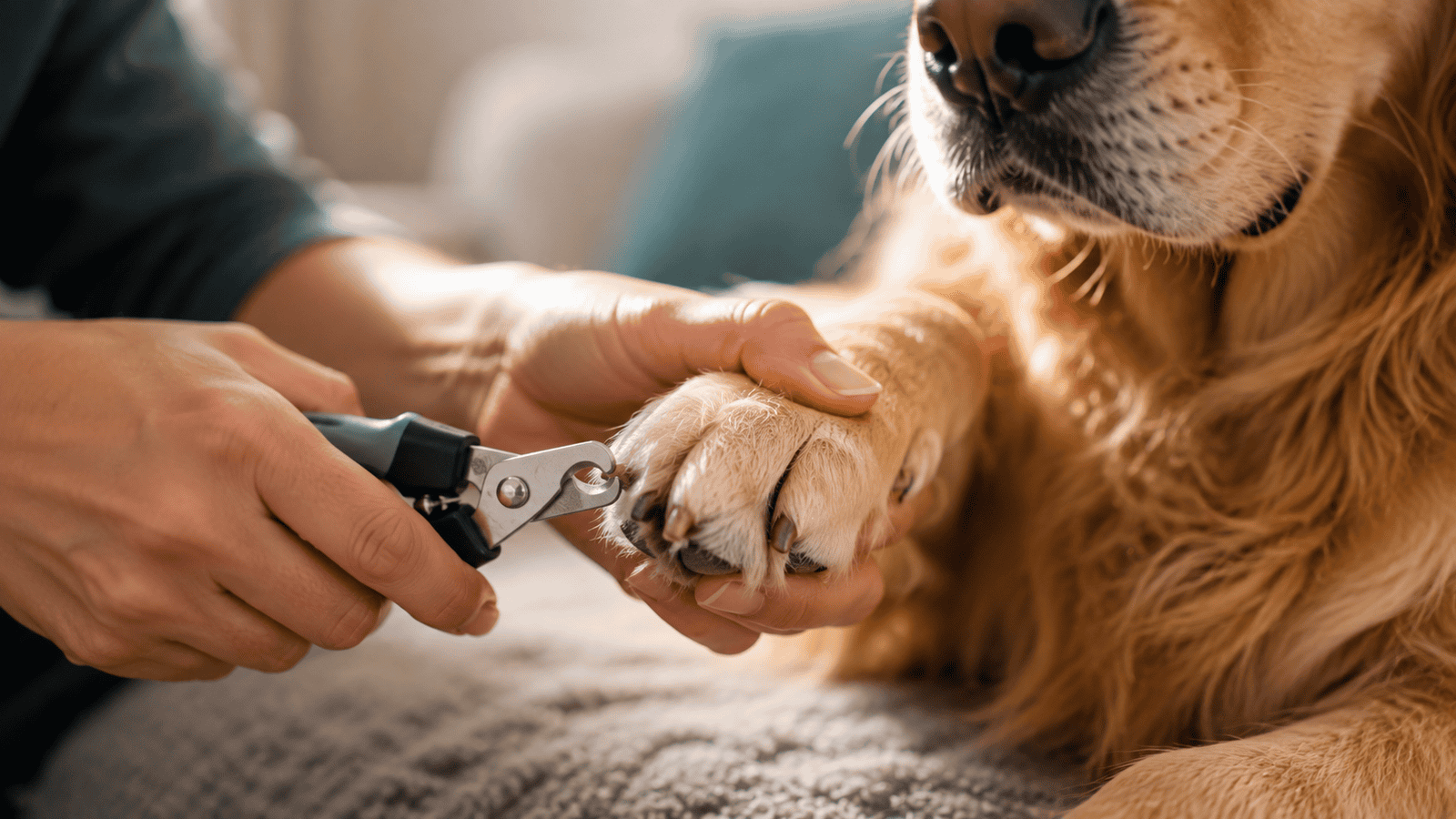
There is no universally safer nail tool for every anxious dog. A grinder removes nail gradually and can make it easier to stop before the quick, but it adds continuous sound and vibration, plus a risk of heat buildup and a rotating part that can catch hair. Clippers are quiet and fast, but one misplaced cut can reach the quick and cause pain and bleeding.
The better starting point is the tool your dog can tolerate while you stay controlled and conservative. If your dog panics when you touch a paw, changing tools alone is unlikely to fix the problem.
Pause Before You Buy
The right tool is not the one with the strongest “quiet” or “safe” marketing. It is the one you can introduce gradually, control precisely, and stop using before your dog becomes overwhelmed.
Affiliate disclosure: GiveItAPaws may earn a commission if you buy through qualifying links, at no extra cost to you. Recommendations are not based on commission. Amazon links are provided for availability; official manufacturer pages remain listed in Sources reviewed for product details and safety instructions.
How we researched this guide
We did not test grinders or clippers on dogs, and this is not individualized veterinary advice. We compared veterinary nail-trimming guidance from VCA Animal Hospitals, Fear Free acclimation guidance, and an American Kennel Club guide that includes guidance from its chief veterinarian. We also checked current manufacturer information for two representative tools so readers can see what a dog-specific grinder and correctly sized clipper look like in practice. We focused on tool mechanics, foreseeable risks, and stress reduction—not manufacturer performance claims, owner anecdotes, or static prices.
Quick comparison: match the tool to the trigger
| Your situation | Reasonable starting point | Why | Main caution |
|---|---|---|---|
| Dog fears continuous noise or vibration | Sharp, correctly sized clippers | The tool is quiet and each cut is brief | The clipping sound and pressure may still startle; take tiny cuts |
| Dog fears the clip or has a bad clipper history | Dog-specific grinder, introduced gradually | It removes small amounts instead of making one cut | Noise, vibration, heat, hair entanglement, and skin contact remain risks |
| Black nails or a hard-to-see quick | Either tool, used in very small increments | Control matters more than declaring one tool risk-free | Stop early if you cannot confidently identify the safe limit |
| Dog accepts clipping but leaves sharp edges | Clip length, then briefly grind or hand-file edges | Combines fast shortening with gradual smoothing | Introduce both tools separately; two tools can mean two stressors |
| Dog struggles, freezes, snaps, or cannot tolerate paw handling | Pause the trim and seek professional help | The handling problem is more important than the tool choice | Do not force completion or improvise medication |
Grinder vs clippers: the real tradeoffs
Nail grinder
A nail grinder uses a rotating abrasive surface to wear away the nail. VCA notes that grinding can leave a smooth edge and carries less risk of damaging the quick than clipping, while also warning about caught hair, skin burns, dust, and the need for gradual acclimation.[1]
Consider another option if: the dog is highly sound-sensitive, has long paw hair you cannot safely hold clear, or becomes more distressed as the session continues.
Main tradeoff: more gradual control, but more time and sustained sensory input.
Best for: an owner who wants adjustable grinding speed and will introduce the sound and vibration gradually.
Consider another option if: your dog cannot tolerate a running motor or you cannot keep paw hair securely away from the rotating head.
What a grinder can do:
- Remove small amounts of nail gradually.
- Round and smooth a freshly shortened edge.
- Offer an alternative for some dogs that dislike the clipper sensation.
What a grinder cannot do:
- Make the quick disappear or make dark nails automatically easy to read.
- Prevent injury if the rotating head touches skin, catches hair, or stays against one spot long enough to create heat.
- Replace acclimation for a dog frightened by sound, vibration, restraint, or paw handling.
Nail clippers
Clippers remove a piece of nail in one squeeze. They avoid the grinder’s continuous motor noise and rotating head, but accuracy matters because the quick contains blood vessels and nerves. VCA advises taking a series of small clips rather than one ambitious cut; the AKC guide likewise recommends clipping only the tip and keeping styptic powder available.[1][3]
Consider another option if: the dog strongly reacts to the squeezing or clipping sensation, the blade is dull, or you cannot position the tool confidently.
Main tradeoff: a faster and quieter process, but less room to correct a cut once the handles close.
Best for: medium-to-large dogs whose owners want a brief, motor-free trimming action and can make small controlled cuts.
Consider another option if: the tool is too large for the nail, the blade is dull, or the dog reacts strongly to clipping pressure or sound.
What clippers can do:
- Shorten the nail quickly without a motor.
- Work well for tiny, frequent trims when the blade is sharp and sized for the dog.
- Reduce the amount of time an anxious dog must remain in position.
What clippers cannot do:
- Show you exactly where the quick ends in every dark nail.
- Guarantee a clean, comfortable cut when blades are dull or the nail shifts.
- Erase a learned fear of the tool’s sight, pressure, or clipping sound.
Anxiety is not one problem
Before buying a different tool, identify the earliest point where your dog becomes uncomfortable. Is it when you reach for a paw, isolate a toe, show the tool, make a clipping sound, switch on a motor, or touch the nail? That answer is more useful than a generic label such as “anxious dog.”
Fear Free recommends separating nail care into small components: the setting, sight of the tool, sound, paw and toe handling, tool contact, and finally the sensation of one nail being clipped or ground. Progress only while the dog remains comfortable, rather than rushing toward a complete trim.[2]
A lower-stress acclimation plan for either tool
- Choose stable footing. Use a nonslip surface and let the dog stand, sit, or lie in a comfortable position.
- Practice paw contact without trimming. Touch the shoulder, move down the leg, briefly touch the paw, reward, and stop before the dog needs to pull away.
- Introduce the inactive tool. Place it at a comfortable distance, reward calm investigation, and end the session.
- Add the sound separately. For clippers, Fear Free suggests clipping dry pasta away from the paw to imitate the sound. For a grinder, switch it on several feet away and reduce the distance only while the dog stays comfortable.[2]
- Pair tool contact with a reward. Touch the inactive clipper or grinder to one nail, then reward. Introduce grinder vibration against the foot before actually removing nail.
- Do one tiny action. Clip a small sliver or grind for only a second or two, reward, and reassess.
- Stop while it is still going well. One nail can be a complete session. Fear Free specifically warns against feeling compelled to finish every nail at once.[2]
Licking lips, pinned ears, looking away, leaning away, pulling the foot back, trembling, freezing, struggling, growling, or snapping are reasons to make the next repetition easier—or end the session. Do not punish warnings or hold the dog down to finish.
Quick safety guidance
If you use clippers
- Use sharp, dog-appropriate clippers that fit the nail; replace or sharpen dull blades.
- Remove thin slivers rather than a large section.
- Keep the toe supported and stop if the dog moves or you lose your view.
- Check dewclaws; because they do not contact the ground, VCA notes that they can overgrow and curve toward the paw pad.[1]
- Keep styptic powder within reach before you begin.
If you use a grinder
- Use a tool intended for pet nails and follow its current instructions.
- Secure long paw hair away from the rotating head.
- Support the toe and make brief contacts rather than holding the grinder continuously against the nail; Fear Free warns that prolonged contact can create uncomfortable heat.[2]
- Keep the rotating surface away from skin.
- Stop if the dog becomes more distressed, the nail feels hot, hair shifts toward the head, or your hand position becomes unstable.
If you nick the quick
Stay calm and apply a small amount of styptic powder to the nail end. VCA also lists flour or cornstarch as alternatives when styptic powder is unavailable.[1] If bleeding does not stop promptly after pressure and styptic powder, the nail is torn, or your dog appears very painful, contact a veterinarian rather than repeatedly manipulating the paw.
When neither tool is a good DIY choice
- A nail is split, torn, infected-looking, or embedded in or pressing into the paw pad.
- A veterinarian has told you that the dog has an increased bleeding risk or another condition that changes normal nail care.
- You cannot see or judge a safe stopping point and do not feel confident making tiny reductions.
- The dog escalates to severe fear, escape attempts, growling, or biting.
- You have tried gradual, reward-based acclimation but cannot make progress.
Fear Free recommends consulting a qualified positive-reinforcement trainer or behavior professional, a veterinarian or veterinary behaviorist, or a Fear Free Certified groomer when moderate to severe stress continues. Medication, when appropriate, should be discussed with and prescribed by a veterinarian—not improvised at home.[2]
How nail care fits into the rest of grooming
A calm nail session is easier when it is not stacked onto an already exhausting grooming routine. If your dog also needs coat work, plan shorter sessions and read our guide to deshedding tools for double-coated dogs before choosing an undercoat tool.
If paw or skin handling is difficult because your dog is itchy, red, or uncomfortable, do not assume it is only a training issue. Our guide to dog shampoos for sensitive or allergy-prone skin explains what shampoo can and cannot address; persistent irritation belongs with a veterinarian.
Frequently asked questions
Are grinders safer than clippers for black nails?
Not automatically. A grinder removes nail more gradually, which may help you inspect progress between passes, but the quick is still present and may still be difficult to judge. A clipper can also be used conservatively by removing tiny slivers. If you cannot identify a comfortable stopping point, ask a veterinarian, veterinary technician, or groomer to demonstrate on your dog.
Can I clip first and grind afterward?
Yes, if your dog has been comfortably introduced to both tools. Clipping can shorten the nail, while a brief grind or hand-file can smooth the edge. The combination is not automatically lower stress; for some dogs it simply adds a second trigger.
How often should I trim my dog’s nails?
There is no single schedule for every dog. Nail growth, activity, surface wear, dewclaws, age, and health all matter. Check the nails regularly and ask your veterinarian or groomer what length is appropriate for your dog rather than relying on a fixed calendar.
Will frequent trimming make an overgrown quick recede?
Regular conservative maintenance may allow the quick to become shorter over time, but do not chase it with a deep cut.[3] Severely overgrown, curled, or painful nails should be assessed by a professional who can see the paw and choose an appropriate plan.
Should I restrain an anxious dog to finish the trim?
Not as a default home strategy. Steady support is different from overpowering a dog that is struggling or threatening to bite. Stop before the situation becomes unsafe and seek professional help for a handling and trimming plan.
What should I buy first?
First identify the dog’s trigger. If continuous sound and vibration are the main problem, sharp, correctly sized clippers may be the more practical starting point. If the clipping sensation or a prior clipper experience is the trigger, a dog-specific grinder may be worth introducing gradually. Buy the tool only after you have a realistic acclimation and safety plan.
The bottom line: the GiveItAPaws verdict
For an anxious dog, “grinder or clippers?” is the second question. The first is “what part of nail care causes the fear?” Choose clippers when speed and the absence of motor noise matter most. Choose a grinder when gradual removal and edge smoothing matter most and the dog tolerates the sensory input. Choose neither for today if the dog cannot remain comfortable and safely handled.
Sources reviewed
These sources were opened and checked for readable guidance relevant to this comparison. Veterinary and expert resources support the safety and handling discussion. Manufacturer pages are used only for representative product identity, construction, controls, and intended use—not to prove safety, comfort, or superior performance. No product was treated as universally best. Sources reviewed September 26, 2026.
- VCA Animal Hospitals — How to Trim a Dog’s Nails
- Fear Free Happy Homes — Nail Trims: Trimming Away the Terror (PDF)
- American Kennel Club — How to Trim Your Dog’s Nails at Home
- Dremel 7760-PGKD Deluxe Pet Nail Trimming Kit official information — used for the 7760 model family’s cordless design, adjustable speed, nail guard, paw guide, and intended pet-nail use.
- Safari Professional Dog Nail Trimmer official information — used for product-line construction, grip, sizing options, and intended grooming use.