
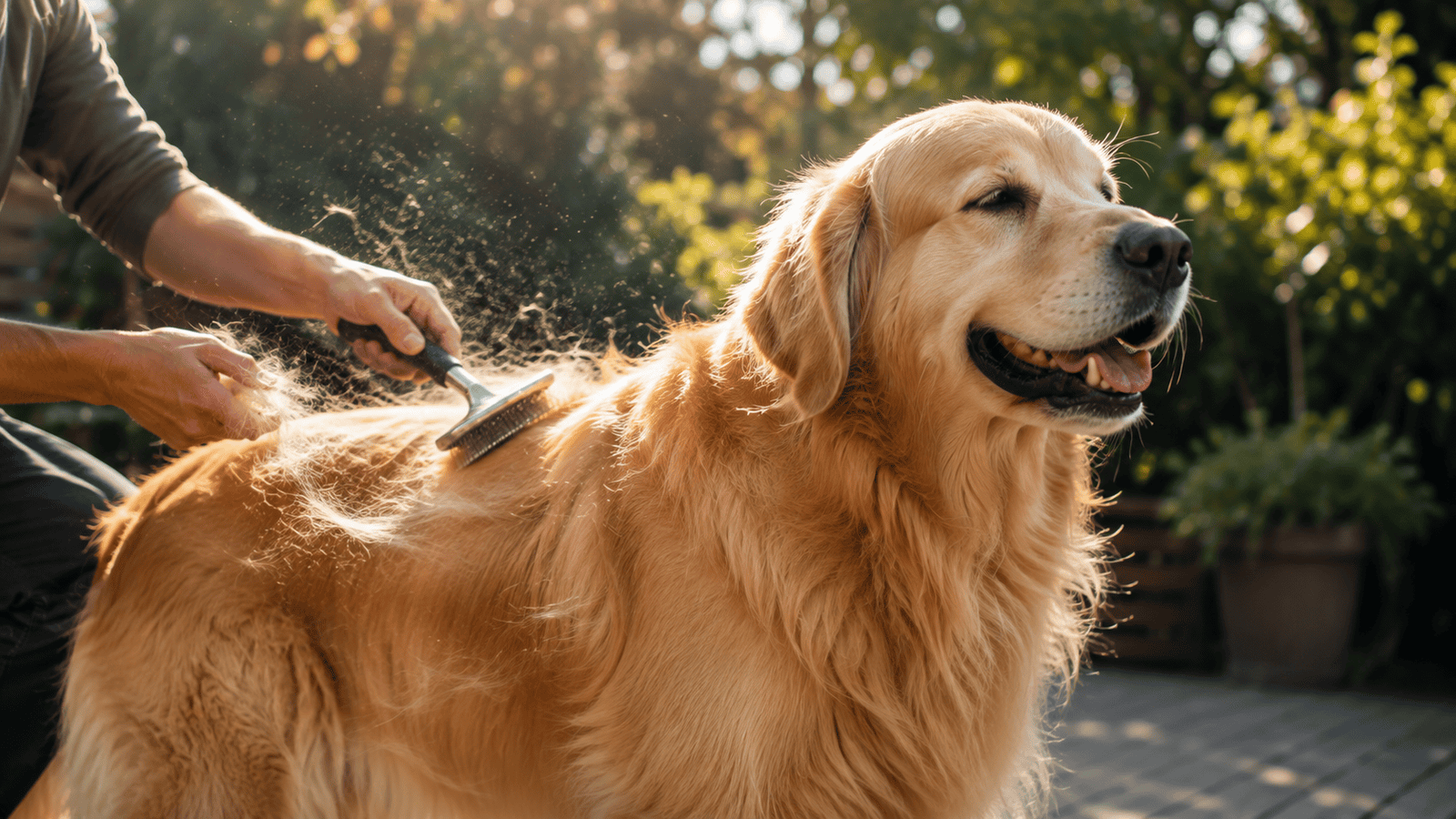
There is no grooming tool that stops a double-coated dog from shedding. A Husky, Malamute, German Shepherd, or Golden Retriever sheds because that is how the coat works, and no brush changes the biology of it.
What a deshedding tool can do is remove loose undercoat that is already ready to fall out before it ends up around the house. That is a real benefit, but it is narrower than many marketing claims suggest. Used on the wrong coat—or with too much pressure—the same tool can irritate skin or damage healthy hair.
Pause Before You Buy
Buy for the coat in front of you, not for the size of the hair pile. A deshedding edge is appropriate only when the dog has a real shedding undercoat, the skin is healthy, and you can use the correctly sized tool with light pressure.
Affiliate disclosure: GiveItAPaws may earn a commission if you buy through qualifying links, at no extra cost to you. Recommendations are not based on commission. Amazon links are provided for availability; official manufacturer pages remain listed in Sources reviewed for product details and directions.
How we researched this guide
We did not run our own coat-measurement tests, and we do not publish performance figures we cannot trace. We reviewed veterinary and professional-groomer guidance on coat types and safe technique, current manufacturer instructions, and two accessible publications that report hands-on testing of deshedding tools. Manufacturer claims are identified as claims—not presented as independent test results.
What a deshedding tool actually does
A deshedding tool reaches through the longer guard hairs to collect loose, dead undercoat. That differs from routine brushing: a slicker brush works through surface hair and light tangles, while an undercoat tool targets the softer layer beneath it.
VCA Hospitals explains that breeds such as Siberian Huskies, Alaskan Malamutes, German Shepherds, and many retrievers have an outer coat of guard hairs plus a fine insulating undercoat. These dogs often have heavy seasonal shedding cycles when much of the undercoat comes out in clumps.
The goal is not to remove as much hair as possible. It is to lift hair that is already loose while leaving healthy guard hairs and comfortable skin alone.
Who should—and should not—use one
- Best match: dogs with a genuine shedding undercoat, including many Huskies, Shepherds, retrievers, and similar double-coated breeds.
- Not a universal choice: curly, continuously growing coats such as a Poodle’s generally need tools selected for detangling and routine brushing rather than an undercoat edge.
- Different tools for smooth coats: VCA recommends flexible grooming gloves or short-bristle brushes for many smooth-coated dogs.
- Pause if the skin is unhealthy: do not use a deshedding edge over sores, redness, broken skin, or an active skin condition. Ask a veterinarian or groomer for guidance first.
1. FURminator Undercoat deShedding Tool — best-documented option
FURminator offers separate tools by dog size and coat length. Its stainless steel edge is designed to reach through the topcoat and collect loose undercoat, while the FURejector button pushes collected hair from the teeth.
The company says its tools can reduce loose hair from shedding by up to 90 percent with regular use. That is a manufacturer claim, not an independent finding. More useful for buyers are the published instructions: use the tool on a completely dry coat, remove tangles first, move in the direction of hair growth, avoid excessive pressure, and stop if redness or irritation appears.
Choosing the right version matters. A long-coated Golden Retriever and a short-coated Labrador may both shed heavily, but they should not automatically receive the same edge length. Check the current size and coat-length chart instead of buying only by brand name.
Consider another option if: your dog has particularly sensitive skin or a coat without a substantial undercoat.
Main tradeoff: the close stainless steel edge requires a light hand and correct sizing.
2. Maxpower Planet Dual-Sided Undercoat Rake — best for thick coats and light tangles
The Maxpower Planet rake uses two rows of curved teeth: a nine-tooth side for working through light tangles and a 17-tooth side for collecting loose undercoat. Its wider head and dual-sided design make it a different tool from FURminator’s close stainless steel edge.
Independent hands-on coverage supports this selection, although it is not clinical evidence. Canine Journal says its reviewer tested multiple deshedding brushes across different breeds and names Maxpower Planet for thick coats that need both deshedding and dematting. Top Dog Tips also includes Maxpower Planet in a roundup whose editors say they tested several tool brands.
That evidence still has limits: neither publication provides a controlled veterinary study, and the rake should not be forced through tight mats. The nine-tooth side can help separate light tangles, but severe or close-to-skin matting belongs with a professional groomer. The metal teeth may also be too assertive for sensitive dogs or thinly coated areas.
Consider another option if: your dog has sensitive skin, a short or sparse coat, or tight mats.
Main tradeoff: the dual-purpose teeth require careful pressure and are less precise than a size-specific tool.
Quick comparison
| Tool | Best For | Main Feature | Main Tradeoff |
|---|---|---|---|
| FURminator | Coat- and size-specific selection | Multiple configurations and detailed instructions | Requires careful sizing and a light hand |
| Maxpower Planet Rake | Dense coats and light tangles | Nine- and 17-tooth sides | May be too assertive for sensitive dogs |
How to use a deshedding tool without overdoing it
- Confirm the coat type. If you cannot tell whether your dog has a true undercoat, ask a groomer or veterinarian before buying a specialized edge.
- Inspect the skin first. Look for redness, sores, lumps, tender spots, or broken skin hidden beneath the coat.
- Remove tangles before deshedding. Never drag a close metal edge through a mat. Severe matting belongs with a professional groomer.
- Check whether the tool is intended for a wet or dry coat. FURminator specifies a completely dry coat, while other tools may differ; follow the current instructions for the specific tool.
- Use long, gentle strokes. Follow the direction of hair growth and avoid repeated passes over one patch.
- Watch the dog, not the hair pile. Stop if the skin reddens, the dog flinches, or the tool begins snagging.
Where this fits into a grooming routine
Deshedding handles loose undercoat; it does not replace ordinary brushing, bathing, nail care, or treatment for irritated skin. If your dog becomes stressed during paw handling, our comparison of nail grinders versus clippers for anxious dogs covers a separate part of the grooming routine.
If shedding is accompanied by itching, redness, or suspected allergies, choosing a stronger grooming tool may be the wrong next step. Read our guide to dog shampoo for sensitive or allergy-prone skin, and ask a veterinarian about persistent symptoms.
Frequently asked questions
How often should I use a deshedding tool?
Follow the instructions for the specific tool and adjust for coat condition and shedding season. FURminator recommends one or two sessions per week for 10 to 20 minutes, with frequency depending on the individual coat. That schedule is manufacturer guidance, not a universal rule for every dog.
Should the coat be wet or dry?
FURminator instructs owners to use its undercoat tool on a completely dry coat. Always check the current instructions supplied with the tool you own.
Can I use one on a Poodle or Doodle?
Do not choose solely by breed label. Coat type varies, especially among mixes. Curly, continuously growing coats often need slicker brushing and combing rather than an undercoat edge. Ask a groomer who can examine the actual coat.
Does deshedding stop seasonal shedding?
No. It removes loose hair already leaving the coat. It does not stop the natural coat cycle.
Why is my dog suddenly shedding much more?
Seasonal coat blow can be normal in double-coated breeds, but sudden hair loss, bald patches, itching, redness, or other health changes should be discussed with a veterinarian.
The bottom line
Choose a deshedding tool only for a healthy, genuine shedding undercoat. FURminator is the more size- and coat-specific option with detailed official instructions; the Maxpower Planet rake is the broader choice for dense coats and light tangles. Whichever tool you choose, use light pressure, remove tangles first, follow that tool’s wet-or-dry directions, and stop at the first sign of snagging, redness, or discomfort.
Sources reviewed
Veterinary and expert-guided resources support the coat-type, grooming, and hair-loss guidance. Manufacturer pages are used only for product design, intended use, and official instructions. Manufacturer performance claims are not treated as independent evidence. Sources reviewed September 24, 2026.
- VCA Animal Hospitals — Grooming and coat care for dogs
- American Kennel Club — How to groom a double-coated dog
- Merck Veterinary Manual — Hair loss in dogs
- FURminator — Large Dog Long Hair Undercoat deShedding Tool
- FURminator — Official usage and safety FAQs
- Canine Journal — Hands-on comparison including FURminator and Maxpower Planet
- Top Dog Tips — Tested deshedding-tool roundup