
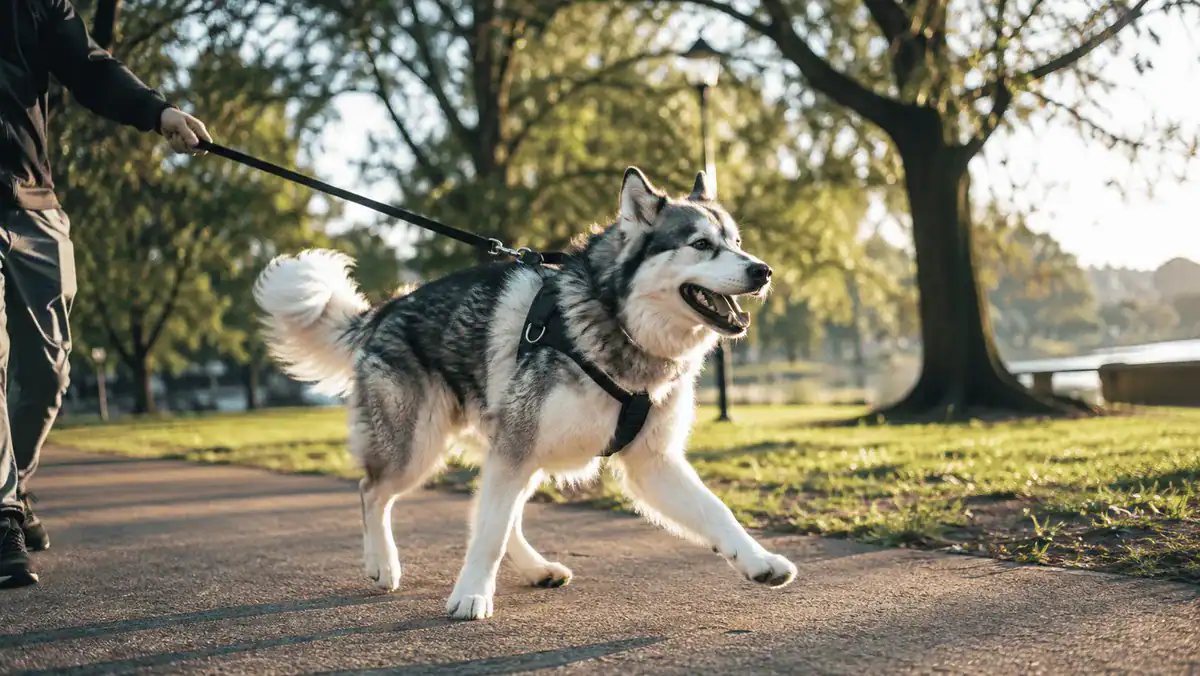
If your morning walk feels more like a tug-of-war than a stroll, you’re not alone. The right harness can give you better control while keeping leash pressure away from your dog’s throat, but different designs work better for different dogs.
One thing worth saying upfront: no harness magically stops pulling overnight. A well-designed harness can make a pulling dog easier to redirect and manage, but lasting improvement still requires consistent training and a proper fit.
Pause Before You Buy
There is no single harness design that works best for every dog. Measure your dog carefully, choose for body shape and walking needs rather than breed or weight alone, and check the fitted harness for shifting, rubbing, or restricted movement.
Affiliate disclosure: GiveItAPaws may earn a commission if you buy through qualifying links, at no extra cost to you. Recommendations are not based on commission. Amazon links are provided for availability; official manufacturer pages remain listed in Sources reviewed for product details and safety instructions.
How we researched this article
We did not test these harnesses hands-on. For this guide, we compared official product specifications, published research on harness categories, fit, and movement, and, where available, recurring patterns in owner feedback shown on product pages. The research supports the general selection criteria and limits; it is not a head-to-head trial of these five products. We prioritized control, secure fit, comfort, adjustability, practical features, and commonly reported drawbacks. Manufacturer pages verify product design and specifications; they do not independently prove that one product will work best for every dog.
Quick comparison
| Harness | Best for | Consider another option if | Main tradeoff |
|---|---|---|---|
| PetSafe Easy Walk | Lightweight everyday control | You want padding, a handle, or a back attachment | Front-only setup with no padding |
| Ruffwear Front Range | Long walks and active use | You want a lightweight design or two metal leash rings | Bulkier than minimalist strap-style harnesses |
| 2 Hounds Design Freedom | Strong pullers and two-point control | You prefer one simple leash connection | More complex setup |
| rabbitgoo No-Pull Harness | Padding, dual clips, and four adjustment points | Your dog prefers lightweight, low-coverage gear | Fit may shift if poorly adjusted |
| Eagloo No-Pull Harness | Front and back metal rings plus a handle | You want a minimalist design or more detailed manufacturer documentation | Less manufacturer documentation |
1. PetSafe Easy Walk — best lightweight option
The PetSafe Easy Walk uses a front chest leash attachment and a patented martingale loop. When a dog pulls or lunges forward, the design helps guide them to the side instead of allowing them to continue driving straight ahead.
It provides less body coverage than most padded vest-style harnesses, which can make it easier to put on and less bulky during everyday walks. It also offers four adjustment points to help owners find the correct fit.
The tradeoff is that fitting matters a lot. The chest strap should sit across the chest without shifting too close to the front legs. Owners looking for thick padding or a back leash attachment may prefer another option.
Consider another option if: You want full-body padding, a control handle, or both front and back leash attachments.
Main tradeoff: Correct chest-strap positioning is especially important, and the harness has no padding or back leash attachment.
2. Ruffwear Front Range — best for active daily use
The Ruffwear Front Range is a padded everyday harness with two leash attachment options. It has an aluminum V-ring on the back for regular walks and a reinforced front attachment at the chest for redirecting a dog that pulls.
Its padded construction and wider body coverage make it better suited to longer walks and outdoor activities than minimalist strap-style harnesses. Multiple adjustment points also make it adaptable to different body shapes.
The main tradeoff is extra bulk compared with basic strap-style walking harnesses. The front attachment is reinforced webbing rather than a second metal ring, which may not appeal to owners who specifically want metal hardware at both attachment points.
Consider another option if: You want a lightweight design or metal leash rings at both the front and back.
Main tradeoff: It is bulkier than a basic strap-style harness, and its front attachment is reinforced webbing rather than metal.
3. 2 Hounds Design Freedom — best for two-point control
The Freedom No-Pull Harness combines a front connection with a martingale-style control loop on the back. It can be used with a double-ended leash, allowing the handler to connect to both points at the same time.
Using two connection points distributes leash guidance across more than one direction. This can provide more control than relying on a single back attachment when a dog leans forward with its full body weight.
The tradeoff is a more involved setup. Owners need to adjust several straps correctly, and the two-point configuration works best with a compatible double-ended leash.
Consider another option if: You prefer a simpler harness with only one leash connection.
Main tradeoff: The setup is more involved and works best with a compatible double-ended leash.
4. rabbitgoo No-Pull Harness — best adjustable padded option
The rabbitgoo No-Pull Harness uses a padded vest-style design with front and back metal leash rings. The front ring can be used to help redirect pulling, while the back ring is intended for relaxed walks, jogging, or hiking.
It includes four adjustment points—two around the neck and two around the chest—plus a handle on the back for additional close-range control. Its combination of padding, dual leash attachments, and adjustability puts several commonly requested features in one harness.
Because it covers more of the dog’s body than a strap-style harness, careful sizing is important. A loose fit can allow the harness to shift, while an overly tight fit may cause discomfort or rubbing.
Consider another option if: Your dog is more comfortable in a lightweight, low-coverage harness.
Main tradeoff: Its greater body coverage makes careful sizing and adjustment important to prevent shifting or rubbing.
5. Eagloo No-Pull Harness — option with metal rings and a handle
The Eagloo No-Pull Harness follows a padded vest-style design with a front leash ring for redirecting and a back ring for regular walking. It also includes a back handle that can provide closer control when moving through busy areas or helping a dog around obstacles.
Its adjustable straps make it usable for dogs with different chest proportions, but the correct size should be chosen from the dog’s actual neck and chest measurements rather than breed or weight alone.
As with other padded vest-style harnesses, the fit and hardware should be checked regularly. Growing dogs may need frequent readjustment, and damaged stitching, buckles, or leash rings are signs that the harness should be replaced.
Consider another option if: You want a minimalist harness or more detailed manufacturer documentation.
Main tradeoff: Manufacturer documentation is more limited, so regular fit and hardware checks are especially important.
How to choose the right harness
Start by measuring your dog’s neck and the widest part of the chest. Do not select a size based only on breed or weight, since dogs of similar weights can have very different body shapes.
After fitting the harness, check that the straps lie flat and do not rub behind the front legs. You should generally be able to fit two fingers between the straps and your dog’s body. Recheck the fit after a short indoor walk before using it outside.
A front attachment can make a pulling dog easier to redirect, while a back attachment is often more convenient for dogs that already walk calmly. Some owners may prefer a two-point leash for additional control. The best setup is the one that fits securely without restricting normal movement.
Frequently asked questions
Does a harness completely stop a dog from pulling?
No. A front-clip or two-point harness can make pulling easier to manage, but it does not replace leash training. Think of the harness as a management tool rather than a permanent solution to the behavior.
Is a front-clip or back-clip harness better?
A front attachment can help redirect a dog that pulls, while a back attachment is often convenient for relaxed walks. However, fit and individual body shape matter. Watch for shifting, rubbing, or changes in your dog’s movement.
How tight should a dog harness be?
The harness should be snug enough that it does not rotate or slip over the dog’s head, but not so tight that it pinches the skin or restricts movement. A two-finger fit is a useful starting point, followed by checking the harness while the dog is walking.
How long does a dog harness last?
There is no reliable universal lifespan. It depends on the materials, frequency of use, weather exposure, washing, and pulling strength. Inspect the straps, stitching, buckles, and leash rings regularly, and replace the harness when damage appears.
The bottom line
The best harness depends on your dog’s shape, pulling strength, comfort, and the amount of control you need. The PetSafe Easy Walk is the lightest option here; the Ruffwear Front Range adds padding for active use; the 2 Hounds Design Freedom supports two-point control; rabbitgoo combines padding with four adjustment points; and the Eagloo instructions document front and back metal rings plus a handle. Measure carefully, verify the fit indoors, inspect the hardware regularly, and pair the harness with consistent leash training.
Sources reviewed
We reviewed published research for the broader evidence on walking equipment and official manufacturer materials for product identity, design, features, adjustment, and use instructions. Official product pages do not independently establish that a harness will work best for every dog. Sources were reviewed September 24, 2026.
- Review of collars, harnesses, and head collars for walking dogs — used for general evidence and limits concerning equipment used to walk dogs.
- PetSafe Easy Walk official product information — used to verify the product’s front attachment, martingale loop, adjustment points, and fitting information.
- Ruffwear Front Range official product information — used to verify padding, adjustment points, and front and back leash attachments.
- 2 Hounds Design Freedom official product information — used to verify the front connection, back control loop, and two-point leash configuration.
- rabbitgoo No-Pull Harness official product information — used to verify padding, adjustment points, handle, and front and back leash rings.
- Eagloo harness product instructions — used to verify the harness configuration, adjustment guidance, handle, and leash attachment points.